
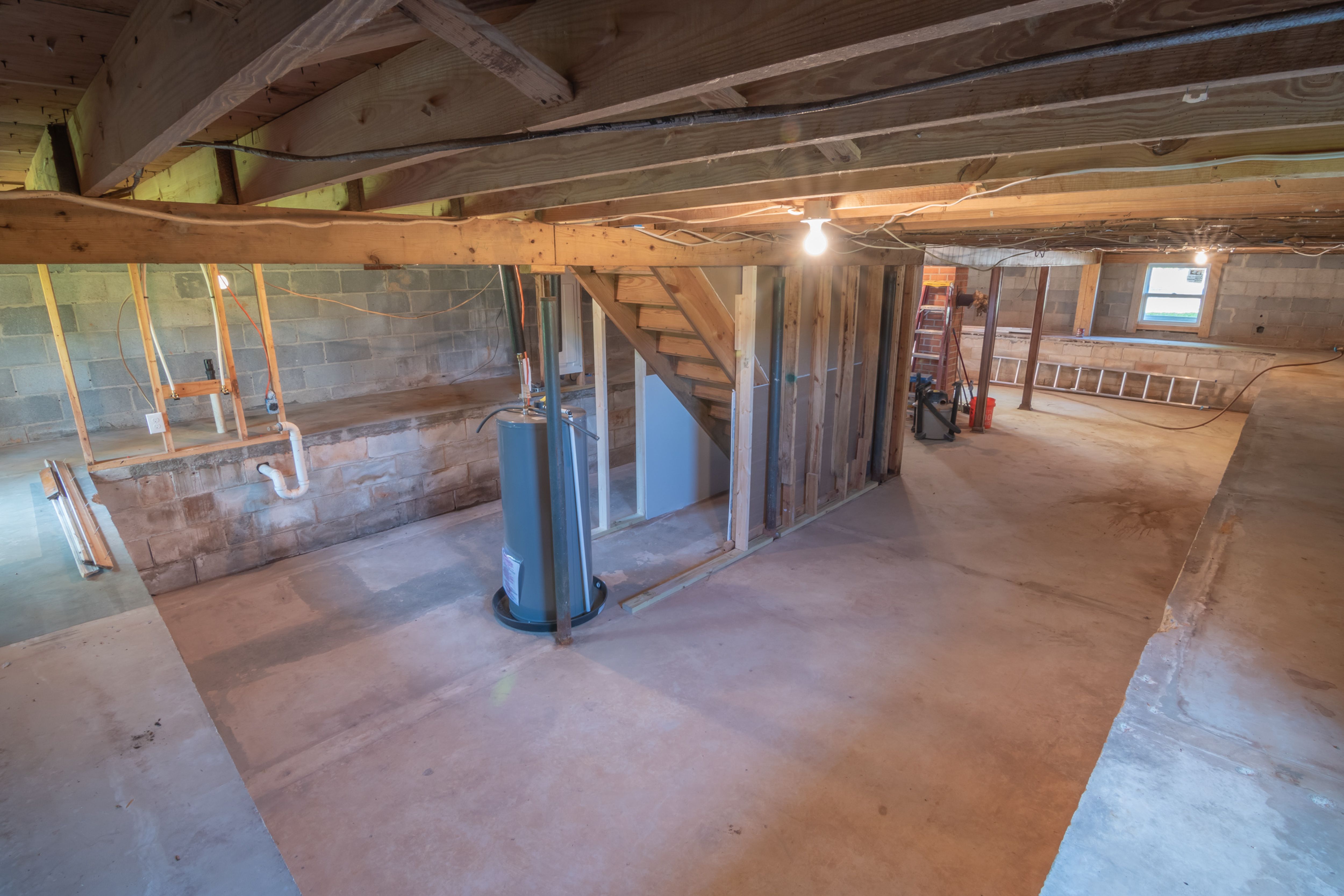
If your Parsippany basement gets damp every time it rains hard, the water is telling you where to look. Parts of Parsippany-Troy Hills sit near the Rockaway and Passaic river systems, and many homes here have older block or poured foundations. A high water table plus heavy fall rain is the classic recipe for seepage, so October is a smart time to diagnose the problem before the ground freezes.
Start with the free fixes
Before paying for anything big, check the basics. Gutters should be clear, downspouts should discharge at least 6 feet from the foundation, and soil should slope away from the house. These fixes often cost $0 to $2,500 and solve a surprising number of wet-wall complaints. If the water shows up only after storms and only at one wall, drainage outside is the likely culprit.
Cracks and leaking joints
A single active crack in a poured wall is usually handled with epoxy or polyurethane injection from the inside. Typical North Jersey ranges run about $500 to $1,500 per crack. Injection stops the leak at the crack but does not address hydrostatic pressure, so if water appears in several places, move on to drainage.
Interior perimeter drain and sump pump
For floor-wall joint seepage, the common fix is an interior drain channel along the footing that routes water to a sump pit. A full perimeter system typically runs about $4,000 to $10,000 depending on basement size and whether the slab needs breaking out. A new sump pump alone is typically $1,200 to $3,000, and a battery backup is worth adding in a town where power flickers during storms.
Exterior excavation and membrane
Digging down to the footing, repairing the wall, applying a waterproof membrane and installing drain tile is the most thorough option. Expect roughly $60 to $150 per linear foot in North Jersey, which means $10,000 to $30,000 or more for a whole house. It makes sense when the wall itself is failing or when interior systems have not kept up.
Know when to stop patching
Repeated paint, sealer or hydraulic cement on a wet wall rarely holds, because water pressure pushes the patch off. If you see white mineral crust (efflorescence), a musty smell, peeling floor tile or water at the floor joint more than once a season, treat it as a drainage problem rather than a surface problem. Catching it early also protects drywall, stored belongings and your air quality. If mold has already started, the wall may need to be opened up and rebuilt after the water is controlled.
Permits, timing and what to ask
Sump discharge and any excavation can involve township requirements, so make sure your contractor handles permits and utility mark-outs. Interior jobs typically take 2 to 4 days; exterior jobs take one to two weeks, weather permitting. Get a written scope that spells out where the water will discharge, what is included for cleanup, and what warranty terms apply. Compare at least two estimates, and ask for the scope in writing rather than a lump number.
Dealing with a wet basement in Parsippany? Learn more about our waterproofing services, see our Parsippany service page, or request a free estimate and we will send licensed & insured contractors to take a look. Call (908) 688-6000.